 EN
EN


About the Author
Dr. Alex Chen is a seasoned commercial real estate investor with over 15 years of experience in identifying high-potential assets and optimizing their long-term profitability. Holding a Ph.D. in Urban Economics, Dr. Chen specializes in market trend analysis and data-driven investment strategies within the leisure and entertainment sectors. His insights are frequently sought after for their rigorous quantitative approach and focus on tangible returns, making him a trusted voice for investors navigating dynamic market landscapes.
Introduction
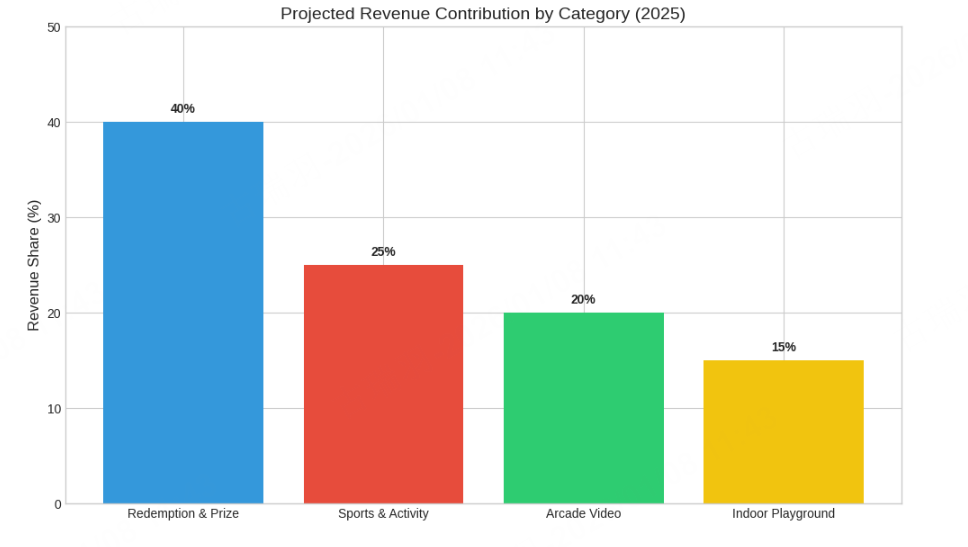
The indoor amusement industry is undergoing a significant transformation, driven by evolving consumer preferences for experiential entertainment and technological advancements. As commercial real estate investors seek resilient and high-yield assets, understanding the nuanced trends shaping this sector becomes paramount. This report delves into the projected landscape of the indoor amusement industry in 2025, with a particular focus on how Redemption & Prize Games are emerging as a cornerstone for maximizing Return on Investment (ROI) [1]. We will explore market dynamics, key performance indicators, and strategic considerations for investors aiming to capitalize on this burgeoning market.
The Evolving Landscape of Indoor Entertainment
The global indoor amusement center market, valued at an estimated USD 51.29 billion in 2024, is projected to reach between USD 84.03 billion and USD 90.8 billion by 2030, demonstrating a robust Compound Annual Growth Rate (CAGR) of approximately 9.0% to 9.3% [2]. This growth is fueled by several macro trends:
- Urbanization and Disposable Income: Increasing urban populations and rising disposable incomes in emerging economies are driving demand for accessible, high-quality entertainment options.
- Experience Economy: Consumers, particularly younger demographics, prioritize experiences over material possessions, making immersive indoor entertainment highly attractive.
- Technological Integration: Advances in virtual reality (VR), augmented reality (AR), and interactive gaming technologies are enhancing the appeal and novelty of indoor amusement offerings.
- Retail Transformation: Shopping malls and commercial complexes are increasingly integrating entertainment venues to drive foot traffic and enhance dwell time, transforming into mixed-use destinations.
Within this dynamic environment, Redemption & Prize Games stand out due to their proven ability to generate consistent revenue and foster customer loyalty. These games, which reward players with tickets or points redeemable for prizes, tap into fundamental psychological drivers of achievement and reward, ensuring high repeat play rates.
Redemption & Prize Games: A Strategic Investment Focus
Redemption & Prize Games encompass a variety of sub-categories, including skill-based games (e.g., claw machines, basketball machines) and luck-based games (e.g., capsule machines, ticket redemption games). Their core value proposition lies in the
tangible incentive of a prize, which creates a powerful feedback loop for players. For investors, this translates into several key advantages:
High Revenue Generation and Profitability
Unlike traditional arcade games where revenue is solely based on play price, redemption games introduce a secondary economy centered around prizes. This model allows for a higher perceived value and, consequently, higher revenue per square foot. Key metrics for investors to monitor include:
- Single Equipment Daily Revenue: A well-placed, popular redemption game can generate significant daily income, often exceeding that of other amusement categories.
- Prize Payout Ratio: This is a critical metric, typically managed between 25-35% of revenue. A lower payout ratio increases profitability but may reduce player engagement, while a higher ratio can attract more players at the cost of margin. Striking the right balance is essential for sustainable ROI.
- Payback Period: High-performing redemption games can offer a rapid payback period, often within 12 to 18 months, making them an attractive asset for capital deployment.
Enhancing Customer Loyalty and Dwell Time
The prize redemption process inherently encourages repeat visits and extended play sessions. Players accumulate tickets or points over time, creating a long-term goal that drives them to return. This "gamified savings" model significantly increases customer lifetime value. Furthermore, the allure of high-value prizes encourages players to extend their stay within the venue, increasing overall spend per visit.
Strategic Implementation for Commercial Real Estate
For commercial real estate investors, integrating redemption-focused amusement centers into properties like shopping malls, family entertainment centers (FECs), and mixed-use developments can yield substantial benefits. The key is a data-driven approach to planning and execution.
Space and Product Mix Optimization
The selection and placement of redemption games are critical. A diversified portfolio of games catering to different age groups and skill levels is essential. High-traffic areas should feature high-earning, visually appealing games to attract players. It is also crucial to design an efficient and enticing prize redemption counter, as this is the culmination of the player's experience and a key driver of satisfaction.
Compliance and Quality Assurance
Adherence to safety and quality standards is non-negotiable. Investors must ensure that all equipment complies with relevant regulations, such as GB 8408-2018 in China or ASTM F1487 in the United States [3]. Sourcing from reputable manufacturers who provide robust after-sales support and spare parts management is crucial for minimizing downtime and protecting the long-term value of the investment.
Data-Driven Operations
Modern amusement management systems provide invaluable data on game performance, player behavior, and prize inventory. By analyzing this data, investors and operators can make informed decisions to optimize the game mix, adjust prize offerings, and refine pricing strategies to maximize profitability. For example, tracking the Redemption Rate (%) and User Dwell Time (minutes) can provide deep insights into which games and prizes are most effective at driving engagement.
|
Key Performance Indicator (KPI) |
Industry Benchmark |
Strategic Implication for Investors |
|
Prize Payout Ratio |
25% - 35% |
Directly impacts profitability; must be balanced with player appeal. |
|
Payback Period |
12 - 18 months |
A primary measure of investment efficiency. |
|
Single Equipment Daily Revenue |
Varies by game/location |
Indicates game popularity and placement effectiveness. |
|
Redemption Rate (%) |
>60% |
High rates suggest strong player engagement with the prize system. |
Conclusion
As the indoor amusement industry continues its upward trajectory towards 2025, Redemption & Prize Games represent a compelling and strategically sound investment. Their ability to generate high revenue, foster customer loyalty, and deliver rapid returns makes them an ideal anchor for any modern entertainment venue. For commercial real estate investors, a well-executed redemption game strategy, grounded in data analysis and a commitment to quality, can unlock significant and sustainable profitability. By understanding the key trends and performance metrics, investors can confidently navigate this dynamic market and secure a competitive advantage in the future of entertainment.
References
[1] Grand View Research. (2024). Indoor Amusement Center Market Size | Industry Report 2030. Retrieved from https://www.grandviewresearch.com/industry-analysis/indoor-amusement-center-market-report [2] Strategic Market Research. (2024). Indoor Amusement Center Market Size ($90.8 billion) 2030. Retrieved from https://www.strategicmarketresearch.com/market-report/indoor-amusement-center-market [3] CPSC. (n.d.). Playground Equipment. Retrieved from https://www.cpsc.gov/Business--Manufacturing/Business-Education/Business-Guidance/Playground-Equipment